When an epoxy floor fails, people usually blame the product. It is almost never the product. It is what happened, or did not happen, to the concrete before the product went on.
The short version
- Coating failures are almost always bond failures, and the bond is decided before the resin is opened.
- The weak top skin of a slab has to be ground off. An acid wash or a good sweep is not preparation.
- Moisture pushing up through the slab lifts coatings from below, so it gets tested before the job, not diagnosed after.
- Oil soaked concrete, old paint and hot tyres each have their own failure signature.
- A floor that fails within months almost always had a preparation problem on day one.
It is the bond, not the bucket
An epoxy coating is only as strong as what it is stuck to. The resin chemistry in a modern system is not the weak link. The weak link is the surface it was asked to bond with, and every common failure traces back to that surface in one way or another. Peeling, blistering, lifting under tyres: different symptoms, same root.
Laitance, and why grinding is not optional
Concrete straight off the trowel has a hard, closed, glassy surface layer called laitance. A coating applied on top of it is stuck to that thin weak layer rather than to the slab, and the first time the floor takes a hot tyre or a knock, it lifts in sheets. Mechanical grinding removes the laitance and opens up a surface profile the coating can key into. This is not a cleaning step and it cannot be replaced by an acid wash or a good sweep.
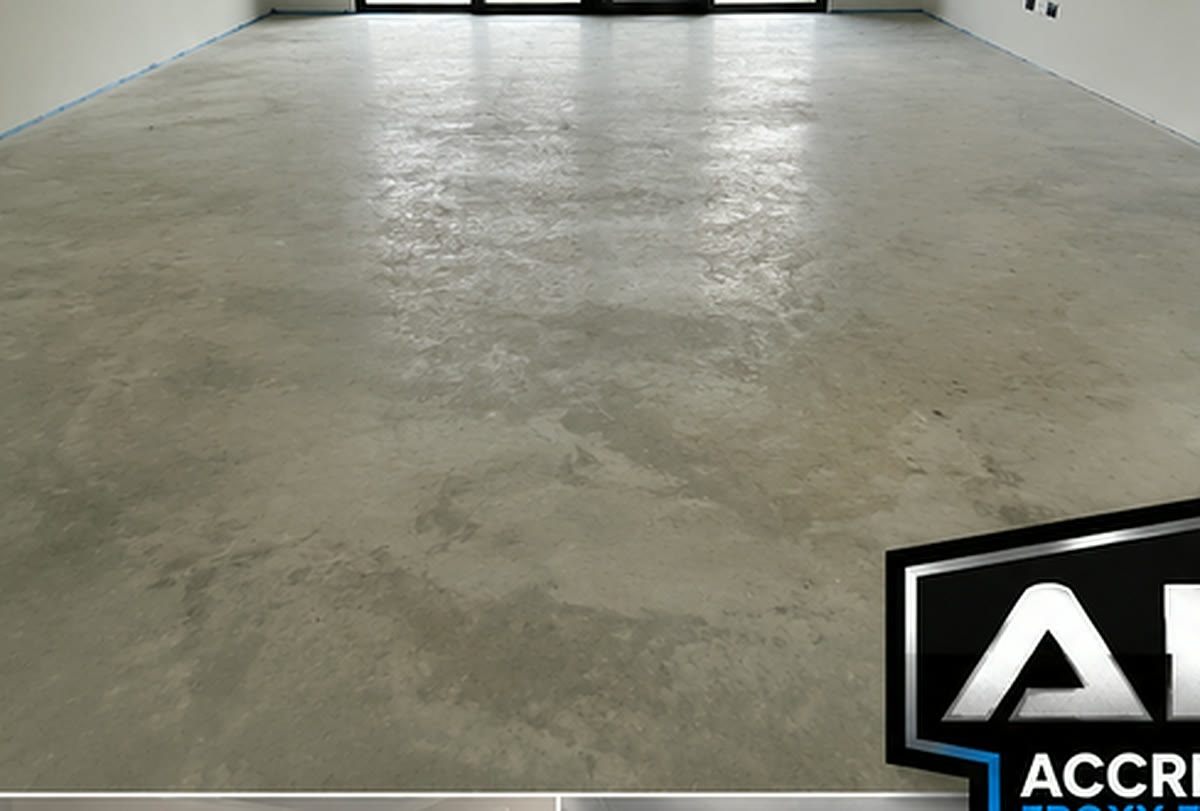
This is why every floor here starts with grinding and surface preparation rather than with a mop and a promise.
Moisture: the failure that arrives from below
Moisture is the second cause. A slab with no working vapour barrier under it, or one that is simply too new to have dried out, pushes water vapour up through the concrete. When that vapour hits the underside of a sealed coating it has nowhere to go, and you get bubbles and blisters weeks or months after the job looked perfect. Moisture should be checked before anything is applied, not diagnosed afterwards.
This one matters on the coast. Slabs near the water table, older homes without membranes, and freshly poured garages all deserve the check. It takes far less time than repairing a blistered floor.
Oil, contamination and old coatings
Concrete is a sponge. A garage slab that has hosted a leaking engine for years has oil drawn down into it, and epoxy will not bond to oil. The contaminated concrete has to be ground out and treated until the surface is genuinely clean, not just clean looking. The same goes for old coatings: whatever paint or sealer is on the slab comes off completely, because a new coating over a failing old one inherits the old one's grip on the floor, which is exactly none.
Hot tyres and cheap coatings
The classic driveway test. A car comes home, the tyres are hot from the road, and they sit on the floor overnight. Cheap, thin coatings soften under that heat and the tyre peels them off the slab as it cools, leaving four bald patches. A properly prepared floor with a quality system shrugs this off. If a floor fails the hot tyre test, the diagnosis is nearly always the preparation or the product thickness, not the car.
What good preparation looks like on the day
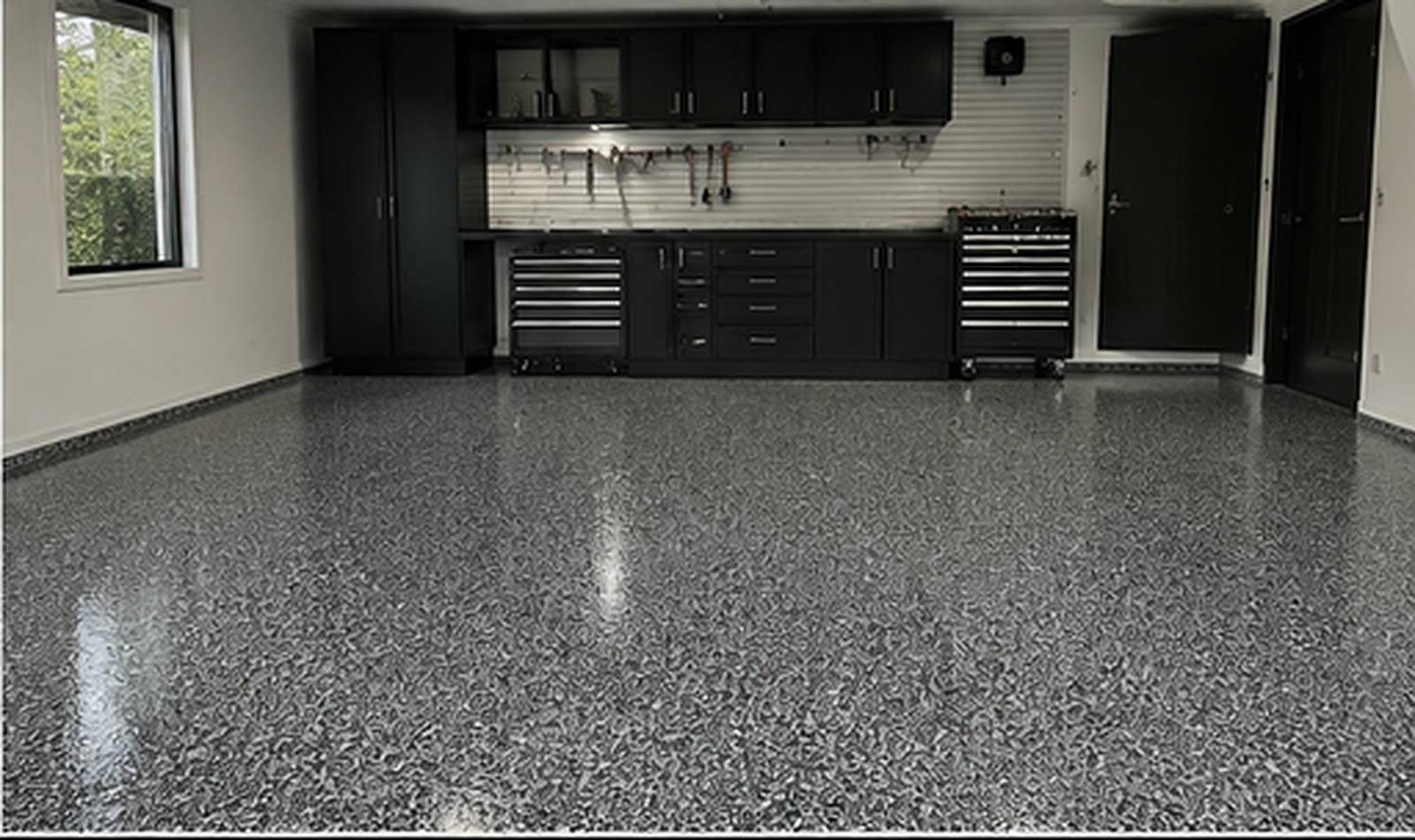
It looks like machinery, not mops. A diamond grinder with dust extraction over every square metre. Cracks cut out and filled rather than papered over. Pitting patched. Oil dealt with. Moisture checked. Only after all of that does the first coat go down, and by then the hard part of the floor's future is already decided.
Getting it done once
A floor done properly is boring for years, and that is the whole point. If you are pricing work, ask every quote the same three questions: is the slab ground, are repairs included, is moisture checked. The cost side of those answers is unpacked in what drives the cost of an epoxy floor.
Accredited Epoxy Flooring preps every floor mechanically and quotes free after seeing the slab, across the Northern Rivers, Tweed Coast and Gold Coast. Get in touch before the old coating makes the decision for you.